

Marriage between a foreign national and a Spanish citizen in Spain: requirements, procedure and key points
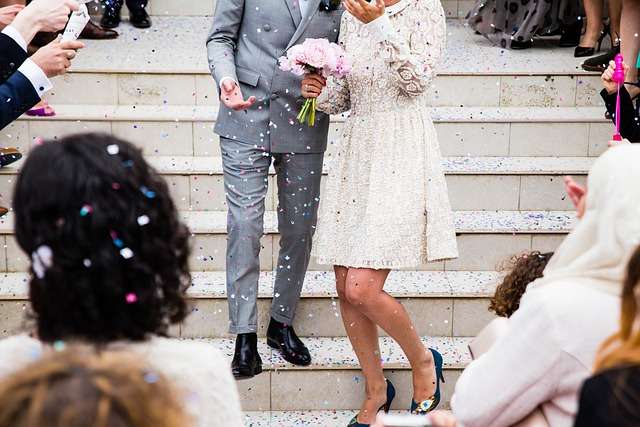
Getting married in Spain between a Spanish citizen and a foreign national is perfectly legal and, in fact, quite common. However, it is not a simple administrative formality nor something that is resolved in a few days. Behind it there is a prior procedure whose purpose is to verify that everything is legally correct and, above all, that the relationship is genuine.
Understanding how this process works is essential to avoid problems, delays or even a refusal.
What the law requires in order to marry
For the marriage to be valid in Spain, both parties must meet a series of basic requirements established in the Civil Code. Essentially, they must be of legal age or legally emancipated, must not have an existing marriage, and must not have a prohibited degree of kinship. It is also essential that consent is free, meaning that neither party is being forced to marry.
None of this is simply assumed. It is verified through a prior procedure known as the marriage file, which is in fact the most important step in the entire process.
Documentation: where problems usually begin
Although it may seem straightforward at first glance, documentation is one of the most delicate aspects, especially when one of the parties is a foreign national.
Both parties must provide basic documents such as a full birth certificate, certificate of registration (empadronamiento) and a valid identity document. In the case of the Spanish citizen, a DNI will usually suffice, whereas the foreign national must provide a passport and, if applicable, a NIE.
In addition, the foreign national must prove their marital status in their country of origin, usually by means of a certificate of single status or legal capacity to marry. If they have previously been married, they must also provide the divorce decree or the death certificate of the former spouse.
This is where many people encounter difficulties. Foreign documents must be properly legalised or apostilled (Hague Apostille) and, if they are not in Spanish, translated by a sworn translator. Any mistake at this stage can delay the procedure for weeks.
The marriage file: the real filter
Once all the documentation has been submitted, the marriage file is initiated at the Civil Registry or, in some cases, before a notary. This procedure does not mean that the marriage already exists; it is a verification phase.
During this process, it is common for the couple to be called for an interview, known as a reserved hearing. Sometimes this is carried out separately. The aim is to detect possible marriages of convenience, that is, those entered into solely to regularise the foreign national’s status.
This point is more important than it may seem. It is not just about having the correct documents, but about the relationship appearing credible. Factors such as how long you have been together, whether you live together, how you met or whether your answers are consistent will be assessed.
If everything is in order, the file is approved and a date can then be set for the marriage ceremony.
The ceremony and its legal effects
The marriage may be celebrated at the Civil Registry, at the Town Hall or before a notary, always in the presence of two witnesses. From that moment on, the marriage is fully valid in Spain.
For the foreign spouse, this opens the door to applying for the EU family member residence card, which allows them to live and work in Spain for five years. In addition, in many cases, they may apply for Spanish nationality after one year of marriage, provided that the legal requirements are met.
An important point: getting married without legal status
A very common question is whether a foreign national in an irregular situation can get married in Spain. The answer is yes. The law allows it.
However, in such cases the procedure is usually more thorough. The Civil Registry will apply stricter scrutiny to ensure that it is not a fraudulent marriage. For this reason, it is particularly important to prepare the documentation properly and, above all, to be able to prove that the relationship is genuine.
👉 Consult the official Civil Registry guide on registering marriages celebrated abroad
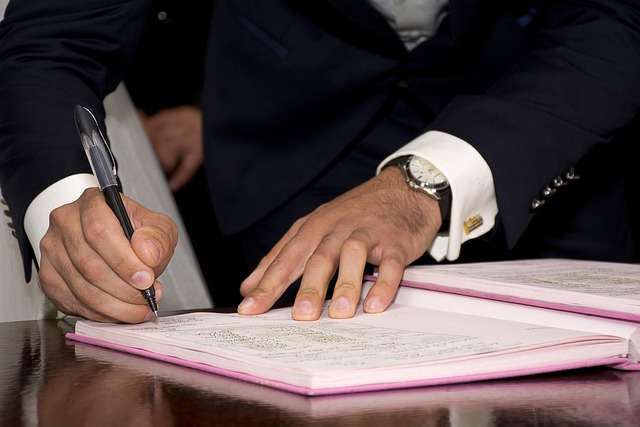
The case of Morocco: specific considerations you should be aware of
When one of the parties is Moroccan, certain important particularities come into play that are not always clearly explained.
In Morocco, civil marriage does not exist as such. The only valid form of marriage is religious, known as a coranic marriage. This means that, if the marriage is to take place there, the Spanish citizen must have previously obtained in Spain a certificate of legal capacity to marry.
This document is obtained through a procedure at the Spanish Civil Registry and is essential. Without it, the marriage celebrated in Morocco cannot be registered in Spain and, therefore, will have no legal effect here, which prevents, for example, applying for residence.
Once the marriage has been celebrated in Morocco, it will be necessary to legalise the certificate, translate it and apply for its registration in the Spanish Civil Registry. Only from that moment will it be fully recognised.
In addition, in these types of cases it is common for administrative control to be stricter, with more detailed interviews and a more thorough review of the documentation.
Conclusion
Marriage between a Spanish citizen and a foreign national is an accessible procedure, but not an automatic one. Beyond gathering the required documents, the key element is successfully passing the marriage file by demonstrating that the relationship is genuine.
Good preparation from the outset can prevent many problems. Because in this type of process, small details make all the difference.
Leave a Reply